
The State of Canada’s Birds is built upon hundreds of thousands of population trends using data from dozens of long-term monitoring and research programs. Most of the data that underpin the State of Canada’s Birds were collected by volunteer observers in programs like the North American Breeding Bird Atlas and Christmas Bird Counts, and the product simply could not exist without the work of these volunteers.

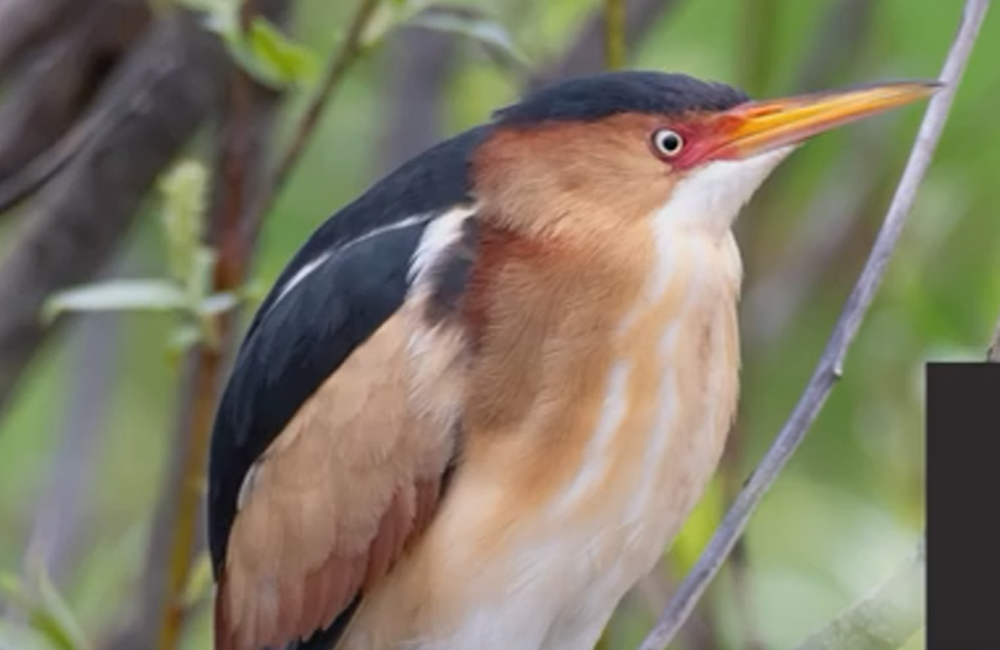
Photo by Jody Allair
The State of Canada’s Birds represents the first time that population trends from this diverse array of monitoring programs have been brought together in a single product. Most of the raw data used to calculate the trends are available through the NatureCounts data exploration tools, and the consolidated trend data can also be made available by request (email naturecounts@birdscanada.org).
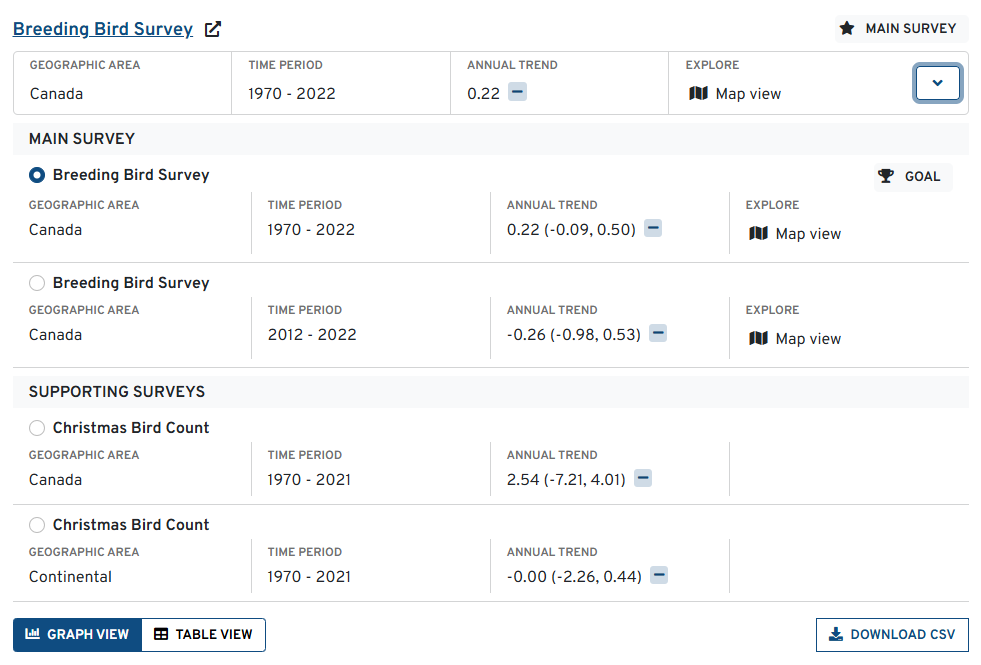
To apply the data to the species accounts, each data source was assessed for its reliability based on the precision of the trend, geographic coverage, and suitability for the species. For each species, the most reliable data source was designated the Main Survey, with up to two additional sources designated as Supporting Surveys. These are the data sources on which the key metrics in the accounts are based. For more information on this process, see the State of Canada’s Birds Methods page.
In addition to trend data, a variety of supporting data are used to complete the species accounts. Occurrence data from programs like eBird, breeding bird atlases, and others feed the distribution maps, and several sources are used for the population estimates.
Next section: Citing the State of Canada’s Birds